Tori Amos's Musical Memories

Photo courtesy of Amarpaul Kalirai.
It seems totally logical—if not actually inevitable—that Tori Amos would eventually write a musical. Over the last two decades, the singer and composer has created work that exists in its own rarefied universe. Her music is often character-driven, populated by winding narratives in which Amos herself serves as both muse and guide. It is these talents that Amos brings to her musical The Light Princess, which made its debut at London's National Theatre in 2013 to great acclaim. Based on the 19th-century fairy tale by George Macdonald, the musical tells the story of a prince and a princess, who each lost their mother at a young age. The young prince becomes so forlorn that he is unable to ever smile, while in another kingdom a young princess becomes so light with her own grief that she floats into the air. Balancing the whimsy of a floating heroine with heavier themes regarding grief and rebellion, The Light Princess feels both remarkably contemporary and incredibly prescient. Though it remains to be seen when a full-scale production of the musical will arrive stateside (Amos hints that plans are afoot), the original cast recording was released earlier last month—a beautifully-packaged disc that includes two songs from the musical performed by Amos herself.
Callum Turner
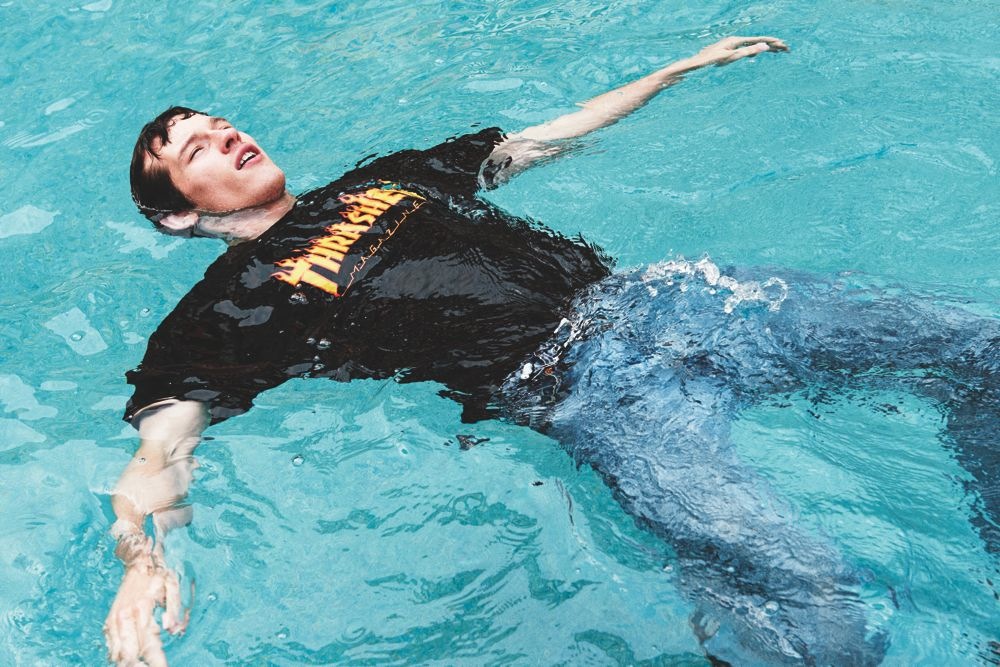
Photo by Dominick Sheldon
When first speaking with Callum Turner in person, it's hard not to be hypnotized. The 25-year-old English actor and model has the effusive, unassuming charm and awkward good looks that make him believable as a wistful young soldier, a terrorized punk rocker, or a married woman's paramour—all roles in which he's recently excelled. Meeting up at a quiet bar in Brooklyn, Turner exudes the unbridled enthusiasm of someone just coming into his own as an artist. "Today was so surreal," he says. "I'm in New York City, and I spent the day floating around in a pool with my clothes on. Now I'm here with you in a bar, and later I'll try to learn to speak Polish for my next movie role. Like, what is this? What's happening?"
Joanna Newsom On Moving Rocks, Annotating Lyrics, And Playing The Hits

Photo by Annabel Mehran
Given the nature of her work — the intricate arrangements; the complicated, often byzantine lyrics; the harp; that extraordinarily wild voice — it’s not surprising that Joanna Newsom has managed to engender such a devoted fan base. She is the very definition of a “singular” artist — someone whose work is totally unmistakable as belonging to anyone else. Over the course of three increasingly challenging full-length releases, Newsom has risen from the ranks of twee freak-folkster to something resembling a kind of rarefied rock stardom (or as close as one can come to such a thing in the world of indie rock). Her last record, 2010’s Have One On Me, was a three-disc behemoth of beautifully knotty songs about love and friendship and the occasional jackrabbit, which was somehow still less challenging than 2006’s Ys, her Van Dyke Parks-arranged extravaganza that boasted songs that regularly twirled past the 10-minute mark and pushed Newsom’s love of winding narratives to dizzying new levels. This being said, Newsom’s music, while always fascinating, is admittedly not for everyone. Her work should ostensibly be the kind of material destined only to guarantee lifetime status as a cult figure, but for whatever reasons — her uncanny charisma and profound talent among them — people have been willing to follow Joanna Newsom wherever she has seen fit to go. Her new album, Divers, should only deepen her fan base. The record is no less ornate than previous efforts, but with only 11 tracks, it’s a much more digestible affair. The production is predictably lush (including contributions from Nico Muhly and Dave Longstreth), and the songs still sprawl in a million fascinating directions, roaming across narratives involving everything from pearl divers and goose eggs to ancient tobacco settlements. However, there is a clarity of vision and a heightened melodicism at play on Divers that makes the record slightly easier to tackle than her last two releases, even though the repeated listens and slow process of unpacking is often what makes Joanna Newsome records so fascinating.
The Roundabout Road To Neon Indian's Decadent New Album
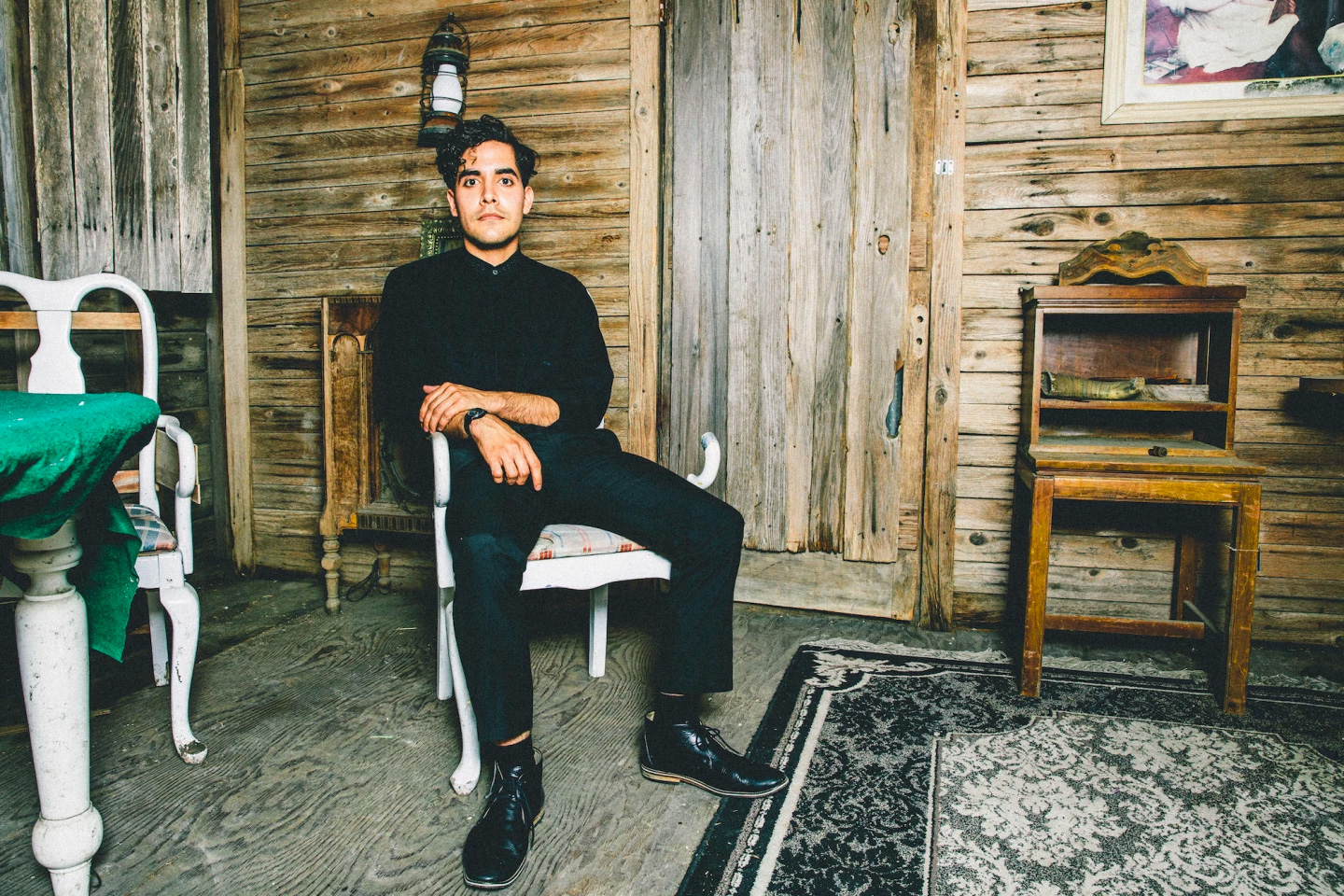
Photo by Pooneh Ghana
Neon Indian’s Alan Palomo lost what was originally supposed to become his third album. Actually, he didn’t lose it per se; it was stolen from him three years ago (vis a vis his laptop) after he drunkenly fell asleep on his own Brooklyn stoop while locked out of his apartment. It’s a story that, when I bring it up, Palomo seems already exhausted of telling, but he’s quick to point out that there’s actually a happy ending. “I don’t advocate passing out in public,” he says, “but I can see now that losing that stuff was, in the bigger picture, actually a good thing. I wouldn’t have ended up making this kind of record if I’d kept on going like I was. I needed a real break.”
Q&A: Super-Producer Glen Ballard On Jagged Little Pill, “Man In The Mirror,” & His Other Classic Recordings

Photo by Jeff Kravitz
Given that the wave of ’90s nostalgia seems to be cresting right about now, it’s only fitting that one of that decade’s most successful and culturally ubiquitous records — Alanis Morissette’s Jagged Little Pill — is now getting the proper reissue treatment. Released in 1995, when Alanis was still an unknown here in the States, the record currently ranks among the best-selling albums of all time, having sold more than 33 million copies. Not only did the record bless us with singles that, for better or worse, will forever be a part of popular consciousness — “You Oughta Know” “Ironic,” “You Learn,” “Hand In My Pocket” — it opened the floodgates for a slew of other female solo artists who would shape the latter half of that decade. Would we have had Meredith Brooks’ “Bitch” or Paula Cole’s “I Don’t Want To Wait” without Alanis? Would Sarah McLachlan have ever gotten Lilith Fair off the ground in 1997 if Alanis hadn’t basically smashed the roof off pop culture just a couple years before? Listening to it now, it’s hard to believe that Jagged Little Pill is an album that almost wasn’t. Written when Morissette was still a teenager and rejected by almost every record label at the time, the album — which was written and produced with legendary producer and studio whiz Glen Ballard — is the kind of unlikely (ironic?) success story that becomes the stuff of legend.
Michael Kors: 7 Fall Essentials Every Man Needs to Buy

As New Yorkers contemplate the seasonal ritual of upending our closets and pulling out our best cool-weather looks, men in need of some fall staples need only look to one of the city’s finest arbiters of good taste, Michael Kors, for a little inspiration. The renowned New York designer’s fall menswear collection contains pretty much everything we’ve come to love from him — a classically restrained color palette (smoky grays, creamy camels, an arsenal of basic blacks), luxe flourishes (alpaca knits, cashmere, calf hair and soft leather) and an always erudite take on classic staples like peacoats, cardigans and an array of multi-functional bags.
I Made It Through the Wilderness: On Gay Fandom, and Growing Older with Madonna

Photo by Mert & Marcus
As stereotypically gay music experiences go, you can’t go much gayer than attending the opening night of a Madonna tour. I say this fondly, and as a forty-something gay man who has seen lots of ostensibly very gay things, including but not limited to Kylie Minogue’s Fever tour, a semi-private Celine Dion concert in New York City, and multiple Erasure tours. Within the pantheon of music culture that gay men hold dear, Madonna has been serving as a defacto ambassador for nearly 30 years since. Admittedly, talking about gay diva worship in pop culture is to trade in both old stereotypes and terrible clichés, but standing outside Montreal’s Bell Centre Arena on the opening night of Madonna’s Rebel Heart tour, it’s hard not to ponder the connection, standing amid sea of excited gay men—most of them sporting Madonna shirts from previous tours, with a few of them dressed as Madge herself. A DJ outside the venue was spinning Madonna remixes and a pack of horned dancers provided "Living for Love" photo ops in front of a Rebel Heart backdrop. There were of course women, and perhaps a younger audience than expected, but Madonna’s audience of gay men is holding steady.
Shirley Manson On Garbage’s 20th Anniversary Reissue And Tour

Photo by Joseph Cultice
This month marks the 20th anniversary of Garbage’s self-titled debut, the album responsible for such ’90s megahits as “Only Happy When It Rains” and “Stupid Girl.” It’s an important record for many reasons, not the least of which is that it helped bridge the gap between noisy alternative rock and mainstream pop — incorporating everything from burgeoning electronica to buzz-saw guitars and just the slightest whiffs of trip-hoppy industrial music. If you were of college-age back in 1995, Garbage was the kind of record that everyone seemed to have some sort of relationship with — from somber gay goth boys like myself blasting “Vow” at peak volume while smoking clove cigarettes in their dorm rooms to legions of newly converted Shirley Manson acolytes aggressively dyeing their hair red and stomping around campus in combat boots and mini-dresses. Garbage was a pop record, to be sure, but it was just genre-bending and weird enough that almost anyone could access it. And unless you didn’t have access to radio and MTV, there was no way to avoid it. The LP spent more than a year haunting the US and UK charts, and eventually sold more than 4 million copies worldwide. Looking back, it’s hard to imagine another ’90s band capable of making a top 20 single called “Queer” seem like the most natural thing in the world. It’s equally impossible to imagine the ’90s without Shirley Manson, who was exactly the kind of angry pop heroine the decade so desperately needed.
FIDLAR’s Zac Carper On Kicking Drugs, Staying Punk, And Sophomore Slumps

Photo by Alice Baxley
Next month, California pop-punks FIDLAR will release Too, the follow up to their much-loved self-titled 2013 debut. As evidenced by early singles “40 Oz. On Repeat” and “West Coast” and “Drone,” the new record doesn’t scrimp when it comes to giant hooks or appropriately buzzed-out guitars, but it does add an extra layer to finesse to the band’s reliably scrappy songs. And while the band hasn’t totally abandoned the bratty goofball charm that made the first album such a fun listen, they have taken — as frontman Zac Carper describes it — some “baby steps” toward growing up. For Carper, this meant not only getting back to his roots when it came to writing new songs, but also coming to terms with the substance-abuse issues that were threatening both his life and the future of the band. I spoke with him about the new record and how getting clean has affected both his life and his music, something clearly reflected in Too album tracks like “Sober” and “Leave Me Alone,” the latter of which we are premiering here.
Bernard Sumner On New Order’s Music Complete And The Ghosts Of Manchester

Whenever a band as iconic and deeply influential as New Order decides to release a new album, it’s cause for both celebration and concern. For longtime fans (like myself), it’s exciting when a group that has profoundly shaped your musical life for the past 35 or so years decides to put something new into the world, but it’s also slightly worrisome. For those of us who have had our hopes dashed by the diminishing returns of late-career albums by the likes of Depeche Mode and the Cure — two of New Order’s very few contemporaries who are still making music — we approach the forthcoming ninth New Order LP (their first in a decade) with the overwhelming feeling of “Yes!” followed by a healthy amount of “Please, please, please don’t let this suck.” Judging from the release of “Restless” — the slick first single from Music Complete — we need not worry too much. According to frontman Bernard Sumner, the new record seeks to embrace the best of New Order’s vast history: a dance record that neatly splits the difference between guitars and synthesizers. While the band’s classic lineup has shifted since recording 2005’s Waiting For The Siren’s Call (bassist Peter Hook is out, original keyboardist and vocalist Gillian Gilbert is back in), and they enlisted a variety of friends to guest on the record (Iggy Pop, Brandon Flowers, La Roux’s Elly Jackson), there is still a very palpable feeling that Music Complete has been constructed with the notion of making a classic New Order record, something along the lines of Technique. (They even brought back design legend Peter Saville to orchestrate the packaging.) While it remains to be seen if the record can live up to all of these promises, it’s an exhilarating prospect just the same. At a time when so much popular music can be traced directly back to the roots of New Order and Joy Division, it’s cool to see those very same musicians — more than three decades later — still turning up to show everyone how it’s done.